Hello, I'm
Md. Ajmain Istiak Apon
Robotics & Machine Learning Researcher
Department of Robotics & Mechatronics Engineering, University of Dhaka
Final-year undergraduate researcher focused on self-supervised 2.5D CT pretraining (JEPA) for label-efficient medical segmentation, training-free latent diffusion guidance (GenMem), and instance-segmentation benchmarking in PyTorch. Actively seeking PhD opportunities in Machine Learning and Computer Vision for Fall 2027.
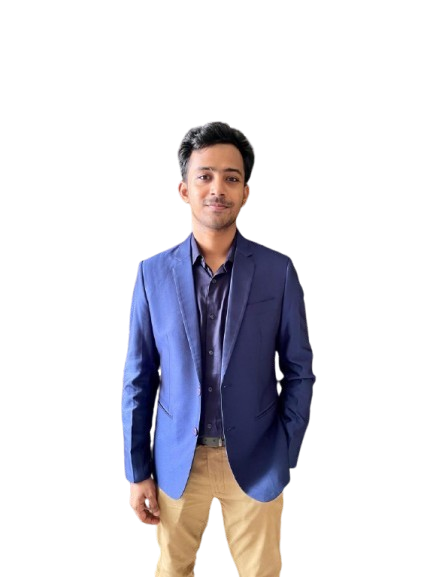
About Me
I am a final-year Robotics & Mechatronics Engineering undergraduate student at the University of Dhaka, Bangladesh, expecting to complete my degree in February 2027.
My research spans self-supervised representation learning, world models, controllable text-to-image generative models, and computer vision benchmarks. I am particularly interested in how self-supervision and training-free guidance can steer neural network representations in low-data regimes.
Currently, I am conducting senior thesis research on steering Latent Diffusion Models via predicted memorability guidance (GenMem), as well as first-author research (under review) titled Mind the Gap, a controlled evaluation of context–target slice separation and masking geometry in 2.5D joint-embedding predictive (JEPA) pretraining for label-efficient CT segmentation. Previously, I developed instance-segmentation benchmarks for stomatal phenotyping in a funded research project.
Most recently, my team NeurAps won the Insight 2.0 Datathon 2026 (Champion of 79 teams), a SEER lung-cancer survival prediction challenge organized by the IASDS Students' Club, University of Dhaka.
Research Interests
- ▸ Self-Supervised Representation Learning: Joint-Embedding Predictive Architectures (I-JEPA), 2.5D cross-slice prediction, masking geometry, ViT-B/16, evaluation protocols for medical SSL.
- ▸ Controllable Generative Models: Text-to-image latent diffusion guidance, DDIM sampling trajectories, memorability optimization (AMNet, ResMem).
- ▸ Computer Vision & Instance Segmentation: Roboflow, COCO benchmarks, YOLOv8s-seg, YOLO26s-seg, Mask R-CNN, automated trait extraction.
- ▸ World Models: Predictive representation learning in latent space; JEPA-style objectives that forecast target embeddings from context, applied to 3D medical volumes.
News & Updates
Technical Expertise
Programming Languages
Machine Learning & Computer Vision
Research Tools
Experience & Leadership
Undergraduate Research Assistant
2024 — 2025University of Dhaka — Funded Research Project: Stomatal Phenotyping (second-author paper submitted to Frontiers in Plant Science) [ajmainapon/StomataAI]
- Benchmarked YOLOv8s-seg, YOLO26s-seg, and Mask R-CNN on a 512-image two-class chickpea microscopy dataset (7,424 guard-cell-complex and pore instances), using identical image-level splits (359/77/76), a locked test set, and three training seeds per architecture.
- On the pooled test set, YOLO26s-seg led mask mAP@0.50 (0.605 ± 0.011) and Mask R-CNN led mask mAP@0.50:0.95 (0.440 ± 0.008); class-specific evaluation showed the pore class, not architecture choice, is the bottleneck (pore AP 0.05–0.17 vs. guard-cell AP 0.70–0.82).
- Compared AI-derived with manual stomatal counts on the locked test set (per-plant R² 0.73–0.77, with systematic overcounting) and co-wrote the manuscript.
President
Oct 2025 — PresentRobotics & Mechatronics Student Club, University of Dhaka
Leading strategic and technical research directions, coordinating workshops on autonomous systems, representing student members in university forums, and establishing institutional research initiatives.
Program Coordinator
Mar 2024 — Sep 2025IEEE Robotics & Automation Society Student Chapter, University of Dhaka
Coordinated academic seminars, hands-on workshops, and collaborative robotics challenges connecting student researchers with international IEEE robotics standards.
Research & Projects
- Implemented GenMem, a training-free guidance method that differentiates a pretrained memorability predictor (AMNet) through the DDIM sampling trajectory of Stable Diffusion, leaving all model weights frozen.
- On DrawBench (n=200): held-out memorability rose +3.42% (ResMem) and +2.72% (ViTMem), both p < 10⁻⁸, with no significant CLIP-fidelity loss; replicated on COCO (n=200) with equal or larger effect sizes.
- Validated causality via reverse-guidance symmetry and a null random-critic control; characterized proxy over-optimization in SDXL and mapped a three-regime dose–response curve across an 8-point guidance-weight sweep.
- Built I-JEPA-CT, a 2.5D cross-slice joint-embedding predictive pretraining pipeline (ViT-B/16 context encoder, EMA target encoder, 4-layer Transformer predictor) trained on 1,082 unlabeled TotalSegmentator CT volumes for ~333k iterations on a single GPU.
- Ran a controlled 2×2 factorial study over context–target slice gap and masking geometry across five label budgets; contrary to video-SSL intuition, narrowing the slice gap (A2) improved linear-probe Dice by 53–202% over the wide-gap baseline and dominated the masking factor, while combining both changes underperformed A2 by 12–17%, exposing a non-additive interaction.
- Showed that the measured SSL benefit is protocol-dependent: A2 gains +102–118% over random init under linear probing but only +13.0 / +8.5 / +2.8% under end-to-end fine-tuning at N=20/50/100 (Welch t: p=0.017, p<0.001, p=0.054), with fine-tuning seed variance reduced 1.3–2.2×; A2 recovers 67% of supervised nnU-Net Dice at N=50 (liver 90%).
- Tested robustness via cross-dataset transfer to AMOS22-CT (+158–260% over random init), CT→MR transfer with no MR pretraining (+41–48%), and a matched 3D SwinUNETR comparison that reproduces the same label-dependent decline in fine-tuning gain.
- Champion among 79 teams — 4th on the private leaderboard (weighted F1 0.8804) and 1st overall after the Grand Finale; the task was predicting
vital_status(Alive / Dead) for 36,000 SEER lung-cancer patients from 24,000 labelled records with 36 clinical features, engineered to 53. - Built a blend of LightGBM, XGBoost and CatBoost, each trained plainly and again with 7,455 high-confidence pseudo-labelled test rows, plus 5% each of RandomForest, ExtraTrees and a neural network; decision threshold optimized to 0.575.
- Gated every modelling decision through stratified 10-fold out-of-fold cross-validation (seeds 42 / 2026 / 7), split-half verification and Optuna tuning across 28 logged experiments; identified right-censoring by diagnosis year as the dominant survival signal and resolved a leakage path before final submission selection.
- Benchmarked YOLOv8s-seg, YOLO26s-seg, and Mask R-CNN on a 512-image two-class chickpea microscopy dataset (7,424 guard-cell-complex and pore instances), using identical image-level splits (359/77/76), a locked test set, and three training seeds per architecture.
- On the pooled test set, YOLO26s-seg led mask mAP@0.50 (0.605 ± 0.011) and Mask R-CNN led mask mAP@0.50:0.95 (0.440 ± 0.008); class-specific evaluation showed the pore class, not architecture choice, is the bottleneck (pore AP 0.05–0.17 vs. guard-cell AP 0.70–0.82).
- Compared AI-derived with manual stomatal counts on the locked test set (per-plant R² 0.73–0.77, with systematic overcounting) and co-wrote the manuscript.
Education
B.Sc. in Robotics & Mechatronics Engineering
Expected Feb 2027University of Dhaka, Dhaka, Bangladesh
Focusing on machine learning, self-supervised pretraining for medical imaging, and generative diffusion models.
Relevant Coursework: Machine Learning, Artificial Intelligence, Intelligent Systems and Robotics, Digital Image Processing and Robot Vision, Digital Signal Processing, Linear Algebra, Statistics for Engineers.
Get In Touch
I am actively seeking PhD opportunities in Machine Learning and Computer Vision for Fall 2027. Feel free to reach out for research discussions or collaborations.